
How the Campus Card Shapes a Student’s First Impressions
How the Campus Card Shapes a Student’s First Impressions
For many students, the first true moment of “I’m officially a college student” doesn’t happen in the classroom, it happens when they receive their campus card.
That small piece of plastic, or digital credential, quickly becomes much more than an ID. It’s a key, a wallet, a library pass, a meal ticket, and often the first interaction a new student has with a campus service team. In those first few minutes of standing in line, getting their photo taken, asking questions, students begin forming impressions about how welcoming, organized, and supportive their institution feels.
For campus card professionals, this is a powerful reminder: we are not just issuing cards - we are shaping first impressions.
The Freshman Perspective: Excitement Meets Uncertainty
Imagine arriving on campus for the first time. Everything is new: buildings, faces, systems, expectations. Students are excited, but also nervous and overloaded with information.
When they walk into the card office during orientation, they’re often asking themselves:
- “Will I know what to do?”
- “Will this be complicated?”
- “Who can help me if I’m confused?”
- “What happens if my card or mobile credential doesn’t work?”
A smooth, friendly campus card experience can instantly reduce anxiety. A confusing or rushed interaction can amplify it.
The campus card is often a student’s first operational touchpoint, and it sets the tone for how supported they feel.
The Card as a Symbol of Belonging
Receiving a campus card (physical or digital) is a milestone moment. It signals inclusion of “you belong here”.
Students use it to:
- Enter their residence hall for the first time
- Swipe into the dining hall with new friends
- Check out their first library book
- Attend campus events
- Access the student recreational center
- Print, copy or make purchases
- Move through daily campus life with more confidence
Each successful interaction reinforces confidence. The card quietly communicates: “You are part of this community.”
Moments That Matter: Where First Impressions Are Formed
There are several key moments where campus card teams can make a lasting impact:
- The Welcome Experience
A smile, clear signage, and patient guidance can transform a transactional process into a warm welcome.
- The First Question
New students often ask basic questions such as how to use their card, where to go, and what to do if it doesn’t work. How staff respond shapes perceptions of campus culture.
- The First Problem
Lost cards, access issues, or confusion are inevitable. Quick, empathetic support builds trust early.
Actionable Tips for Campus Card Offices: Turning First Impressions into Lasting Ones
I spoke with Kim Pfeffer from Emory University and Titus Johnson from Nova Southeastern University to learn more about the strategies they and their teams use to provide excellent customer service in their card offices. Thank you to Kim and Titus for sharing the helpful insights below.
1. Create a “First Swipe Success” Checklist
Whether cards are distributed through the card office, orientation, or another campus process, students should leave knowing how to use their credential with confidence.
A simple “First Swipe Success” checklist might explain how to:
-
-
- Access a residence hall or assigned building
- Use dining or meal plans
- Add funds or view balances
- Use print and copy services
- Understand where the card or credential can be used
- Get help if something does not work
-
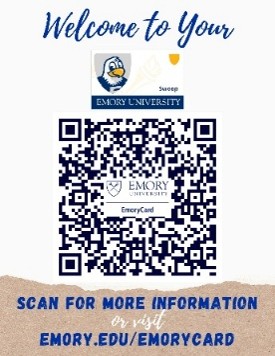 This does not need to be a printed handout. A QR Code, webpage, digital guide, or “Welcome to Your Card” resource can give student quick access to the information they need when they need it.
Kim noted that her front desk team uses a QR code linking customers to a “Welcome to Your EmoryCard” resource, which is also easy to find on their EmoryCard Website.
2. Lead with Warmth, Not Just Efficiency
This matters because many students arrive at the card office already overwhelmed. A warm greeting and genuine conversation can help them feel seen and reassured.
Titus shared a simple but powerful reminder: you never know how far a smile goes. His advice is to make sure students feel comfortable by leading with a smile, being polite and respectful, engaging in real conversation, and avoiding a robotic interaction.
Efficiency matters, especially during busy times like orientation and move-in. But warmth is what students remember.
3. Design the Space for Welcome, Not Just Transactions
Look at your service area through the eyes of someone new to campus.
Ask yourself:
- Is the office or service point easy to find?
- Is signage clear?
- Is the process obvious?
- Are the expectations communicated?
- Is the tone welcoming?
- Can someone quickly understand what to do next?
Small changes can lower stress: welcome signage, friendly messaging, clear directional signs, or a simple “Start Here” instruction can make a big difference.
Even if students do not come directly to the card office, the same thinking applies to any card distribution location. Residence hall check-in, orientation tables, mobile credential support stations, and pop-up service areas all shape the student experience.
Kim shared this helpful information about her pop-up station: “At Emory University, during Move-In and Orientation, the card office sets up a pop-up station in the highly trafficked Student Center, which houses the Dining Hall. This allows easy access to our team for new/replacement cards, troubleshooting and general questions. Not only are we set up on each new student move-in day, but we also are there as returning students move-in and on the first day of classes. Being present at the Student Center allows students access the services they need from us without having to travel to/find our office during those first few busy days on campus.”
4. Train Staff on the “New Customer” Mindset
New students or staff members to the university may not know campus language, office names, acronyms, or processes that feel obvious to staff. Remind teams to slow down, use plain language, and avoid assuming new students already understand how things work.
Kim has a few tips below from her card office:
- Treat each customer as a VIP – “Very Individual Person” because each one will present themselves with different needs, wants, emotions and stereotypes.
- While the customer is waiting for their card to print, pass along important care/usage tips and best practices, like not charging the phone with the card attached, not punching holes in the card, etc.
Some additional helpful tips include:
- Explaining one step at a time
- Avoiding acronyms when possible
- Offering reassurance
- Saying things like, “You’re all set,” or “This happens all the time,” or “We are happy to help.”
- Checking for understanding before the student leaves
This mindset is not limited to first-year students. Anyone new to the campus community may need extra guidance, including transfer students, graduate students, new employees, and visitors.
5. Prepare Staff to Be Campus Connectors
Students may come to the card office with questions that go beyond their ID. When staff can help them navigate the next step, the card office becomes more than a service point. It becomes a trusted connection to the campus community.
Titus emphasizes the importance of knowing “what you don’t know.” Card office staff do not have to know every answer, but they should know enough about the campus to point people in the right direction.
That might include knowing where to direct questions about:
- Housing
- Dining
- The library
- Registrar services
- The bursar or student accounts
- One-stop student services
- Parking or transportation
- Technology support
6. Partner with Orientation and Move-In Teams
Some of the strongest first impressions happen outside the card office. Partnering with orientation, housing, dining, IT, public safety, and move-in teams can help students get support where they already are.
Ideas include:
- Hosting pop-up card stations during move-in
- Providing quick troubleshooting at residence hall check-in
- Sharing “Card 101” messaging during orientation
- Coordinating mobile credential instructions before arrival
- Providing card office FAQs to orientation leaders or resident assistants
When campus partners understand the card experience, they can help reinforce accurate information and reduce confusion.
7. Anticipate the Top Five + Questions
Proactive communication can reduce anxiety, shorten lines, and help students feel more prepared and confident.
Common questions may include:
- “What if I lose my card?”
- “How do I use my mobile credential?”
- “Why didn’t my access work?”
- “What meal plan do I have?”
- “What is the difference between the plans on my card?”
- “How do I print or copy?”
- “Where can I add funds?”
- “Who do I contact after hours?”
Prepare quick reference answers for staff, student employees, orientation teams, and campus partners. Posting answers online or sharing them through QR codes can also help customers solve simple questions quickly.
8. Make the First Problem a Positive Experience
It’s inevitable, something will go wrong. A card may not work. A student may lose it. A mobile credential may not be loaded. Access may not be assigned correctly.
When that happens, the issue becomes more than a technical problem. It becomes a trust-building moment.
A positive response includes:
- Responding quickly
- Listening first
- Explaining clearly
- Avoiding blame
- Following up when needed
Students and customers may not remember every detail of the process, but they will remember how they were treated when they needed help.
Looking Ahead: The Evolving First Impression
As digital credentials, mobile wallets, and frictionless access expand, the definition of “first impression” is evolving. For some students, it may begin before they even arrive on campus, downloading their credentials, exploring services, and feeling connected early.
Yet one thing remains constant: the campus card experience reflects institutional care.
Whether the credential is physical or digital, whether the interaction happens in person or online, students are still looking for the same thing. They want to know: Do I belong here? Can I find my way? Will someone help me if I need it?
Campus card offices help answer those questions every day.
Happy customers at Emory University
To see this impact in action, Emory University’s card office offers a great example of how thoughtful service can shape a positive experience. From clear online instructions to welcoming in-person support, these moments show how campus card teams can make students, staff, and other customers feel informed, supported, and valued.
Here are a few comments from happy customers at Emory University:
- “The staff member that helped in the badge office was EXCEPTIONAL. He helped me in many ways to make my re-entry into Emory so pleasant . . . Many thanks to him with my Emory ID card and providing me with information about building access and maintaining my card safely as well as providing me with a cute holder.”
- “This process was super easy. The website instructions were clear on what I needed to do beforehand to get a new card. After checking in on the machine, I walked into the lobby, and the staff was already printing my new card. They had a bunch of different payment options, and I was out the door with my new card in about 60 seconds. Thanks a ton!
- “The front desk was beyond kind, cordial and accommodating. Very knowledgeable and made sure to show and explain to myself and another newly hired staff member the safety hazard of placing the cards in contact with our cellphones. I thought that was quite an effect approach to safety education. Definitely a great experience due to his wonderful customer service.”
Final Thought: More Than a Card
When a freshman looks at their campus card, they see the possibility of new friendships, new opportunities, a new chapter.
For NACCU professionals, it’s a reminder that every interaction, process, and design decision contributes to how students feel about their campus from the very start.
Because first impressions aren’t just formed.
They’re intentionally created.