
What Happens When Dining Meets Students Where They Are
Meet Students Where They Are: Lessons from Pitt
 If you work with campus dining, you already know the stakes are higher than ever. Students expect great food, zero friction and plenty of choice. Leadership expects efficiency and a clear data story about value. And your staff just wants systems that actually work without manual intervention.
That tension is exactly where innovation lives.
In a recent NACCU webinar, Julie Bannister, Assistant Vice Chancellor for Auxiliary Services at the University of Pittsburgh, walked through how her team is using technology and communication to transform dining on a large campus. This is not a shiny tech showcase. It is a very practical story of trying new ideas, fixing what does not work and using data plus partnerships to keep getting better.
Here are some of the big ideas you can steal for your own campus.
Innovation is not always new tech.
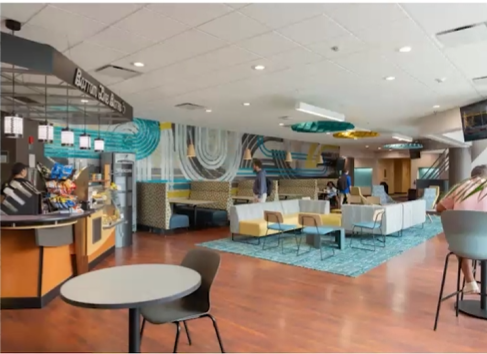 Julie’s definition of innovation is refreshingly grounded. It is not about chasing the newest gadget, but just asking a simple question:
How can we get more out of the systems we already have?
At Pitt, that has meant leaning hard into existing platforms like Transact, mobile ordering, kiosks and Amazon Just Walk Out stores. The team listens at conferences and webinars to what other schools are trying, then asks how those ideas can be adapted at Pitt, through their partnership with Chartwells.
That last part is key. What works in one dining hall or one campus will not drop in perfectly somewhere else. Innovation is about fit. Instead of “What new product can we buy” try questions like:
-
Can we use our mobile app for more than just balance checks?
-
Can this feature work in our busiest location first as a pilot?
-
Is there a way to reuse a workflow that is already working in one venue and adapt it for another?
The technology is important, but the mindset of thinking outside the box is what unlocks value.
Meet students where they are, not just where your registers are.
Pitt has traditional walk up registers in their dining locations, but students are increasingly living inside their phones. They order take-out from Door Dash and groceries from Instacart. They modify their sandwiches via a kiosk at WaWa or Sheetz. They even customize the type or size of vehicle on their favorite ride share app! To provide Pitt students with the same level of customization, the team focused on two things:
- Where and how could ordering kiosks be placed to improve the student experience?
- How could we integrate mobile ordering into daily life?
Kiosks in all-you-care-to-eat
Kiosks had been in use around campus in retail locations for some time. The twist was adding them inside an all-you-care-to-eat dining hall so that students could easily customize their meals.
Initially the team tried to run everything at two specific concepts through mobile ordering. Students placed a mobile order, got a QR code, checked in and then their order was released. On paper this sounded smart.
In reality it was clunky. There were extra steps, more wait time and confusion at the stations from both students and food service employees.
Rather than give up, they stepped back and asked
- Where do kiosks already work well?
- What if we adapted that model instead of trying to force mobile into this space?
They used summer to test in a single allergy-free location first. Students ordered on a kiosk in the unit, orders went straight to that station and was prepared. When that went well, they expanded kiosk ordering to key stations across the main dining hall.
Now students can still pick up a featured meal, but they can also choose made-to-order burgers, sandwiches, pasta and more at kiosks. The result has been faster turnaround and better control over customization.
The lesson: Try the idea you believe in. If it is clunky, do not abandon the goal. Redesign the pathway.
Mobile ordering is not just a convenience. It is an operations and communication hub for our dining partner.
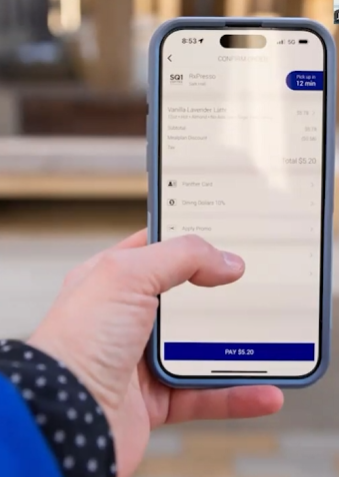 Pitt has gone all in on mobile credential and mobile ordering. That decision does more than just make it easier to pay. It turns the mobile platform into a central hub for data and communication.
From the student point of view
- They can see wait times and choose where to go.
- They can order on the way to class.
- They can manage balances and meal plans in one place.
From the operations point of view
- Staff can see when orders are late and adjust staffing.
- They can identify peak times and tune menus or throughput.
- They can build targeted marketing inside the app.
One nice example is Chick-fil-A. During rushes the area around the location used to be chaotic. Orders were placed only when a student reached the counter, lines were long and staff were shouting out names.
By combining mobile ordering with an on-site check in, similar to a standard Chick-fil-A experience, the team cut down wait times and smoothed operations. Students order in advance, then check in when they arrive so the kitchen knows when to fire.
Again, this is just about using existing tools in a smarter way.
Amazon Just Walk Out is about more than cool tech.
Amazon Just Walk Out markets are often seen as a flashy add-on. At Pitt, they are part of a deliberate strategy.
Why they chose it
-
It integrated directly with Transact, which made it sustainable, not a one off experiment.
-
The university already had a broader relationship with Amazon for other services.
-
The model fit both everyday student use and high volume athletics concessions.
The student experience is simple. Choose the store in the mobile app. Ensure you have a sufficient balance. Generate a QR code, scan, walk in, grab what you want and walk out. Behind the scenes, Amazon handles the item recognition and passes the final total back to Transact to deduct from the account.
On the operations side, the really powerful piece is analytics. The team can see heatmaps of where customers linger, which products move, and how traffic flows. That data helps Chartwells place products intelligently and adjust staffing.
They have also evolved the financial model over time. They began with declining balance only, learned how spending patterns worked, then added a meal swap option once they understood the system well enough to avoid surprises.
They launched the first market as students were arriving. That created a lot of pressure to learn on the fly. Julie's advice is to build in more cushion. Pilot early if you can, refine, then go big.
Use pilots and be honest that some things will not stick.
A recurring theme in the webinar was piloting.
Pitt has piloted a robotic coffee bar, specialized vending, SodaStream partnerships and Farmer’s Fridge. Some stuck. Some did not.
Farmer’s Fridge, for example, could not integrate cleanly with mobile credentials through Transact and ultimately did not fit the long term model. SodaStream was popular with students from a sustainability perspective but did not mesh well with the meal plan and campus systems.
The important part is how they handle this with students.
They frame these as pilots up front. That sets the expectation that some projects will continue and some will not. Communication around pilots focuses on adding value, not taking things away. That transparency makes it easier to remove something that is not working without damaging trust.
If you want to borrow this approach
-
Start small in a single building or location.
-
Tell students clearly it is a pilot.
-
Plan how you will measure success before you launch.
-
Be ready to say this did not fit our long term model and here is what we learned.
Tackling food insecurity with tech that protects dignity.
A post-pandemic survey showed a significant number of Pitt students were food insecure. The question became What can dining and housing do about that in a way that removes stigma.
The answer involved a combination of
- Temperature controlled lockers that integrate with Transact
- Food recovery from dining halls and catering
- Close partnership with Student Affairs and the campus pantry
- Smart use of the mobile app
Meals from food recovery are packaged and placed in Ondo lockers that are set to refrigeration. Only students who have been granted access by the CARES and pantry teams can see the special menu inside the mobile app. They choose their meals, receive a locker number and pick up when it is convenient.
To anyone walking by, these lockers could be holding grocery deliveries, regular food pickup or recovered meals. No one can tell which is which. That is intentional. It removes the feeling of being singled out.
They also allow students to donate flex swaps or declining balance at registers, and run a meal voucher program that loads meals onto accounts so students enter all you care to eat spaces through the same turnstiles as everyone else.
Technology alone does not solve food insecurity. But it can quietly remove friction and protect privacy.
Sustainability and reusable containers only work if you can track them.
Usefull is another example of aligning operations and values. Pitt wanted a strong reusable container program. The first vendor made it difficult to track inventory and get containers back, so costs kept climbing.
With Usefull, containers are tied to individual accounts through an app and QR code. Students have a window of time to return a container before late fees and replacement charges kick in. That accountability loop makes the inventory manageable and turns the program into something sustainable for both the environment and the budget.
They have even built useful return bins into the design of new spaces like the recreation center, so the program is visible and easy to use.
Sustainability programs are more likely to last when they have clear tracking, mild but real consequences for non return, and are integrated into space design and mobile apps.
Data is only useful if you act on it.
Throughout the webinar, Julie came back to one theme.
Reporting and analytics are not optional anymore. They are how you justify the investment in technology and how you keep improving.
Her team watches:
-
Mobile order late times
-
Peak periods by location
-
Performance at problem locations like Chick-fil-A
-
Amazon Just Walk Out traffic patterns and product heatmaps
-
Usage of lockers, vouchers and donation programs
Then they make changes. They adjust menus, staffing, hours and workflows and watch to see if the numbers move.
If you are just starting with this, you do not need a perfect dashboard on day one. Start with one or two pain points and one or two metrics that you can track consistently. Over time you can add more.
Partnerships are the real force multiplier.
A final thread running through all of this is partnership.
None of these projects were done in isolation. Pitt’s auxiliary services team works closely with
- Chartwells for operations and feedback
- Transact for integration and mobile features
- Amazon for Just Walk Out analytics and transactions
- Student Affairs, the pantry and CARES for food insecurity programs
- Local merchants through campus cash and community support
Innovation looks glamorous from the outside, but behind the scenes it is a lot of relationship-building, expectation setting and mutual problem-solving.
If there is one big lesson from Pitt’s experience, it is this:
You do not have to invent everything from scratch. You can listen, borrow, and adapt. You can meet students where they are, protect dignity, support your community and still hit your operational goals. And you can do all of that by getting more out of the tools you already have, one smart experiment at a time.
Watch the recorded webinar here: