
Why Students Rarely Read Card Office Emails
Why Students Rarely Read Card Office Emails
 I know why students rarely read card office emails.
The reason is sitting in my house.
I have a 19 year old son.
As a Gen Xer, I grew up as part of the latchkey generation. We learned early how to figure things out for ourselves. We planned ahead, tracked deadlines, and wrote to-do lists. We knew that if we forgot something important, there wasn't a smartphone in our pocket ready to rescue us. And our parents didn't want us inside the house until the streetlights came on anyway... so forget about bothering them to ask for their help with our planning.
So I would have read every email from the college three times, highlighted the important parts, printed out directions, and probably created a backup plan for my backup plan.
My son does none of those things.
Nothing.
Drives me insane.
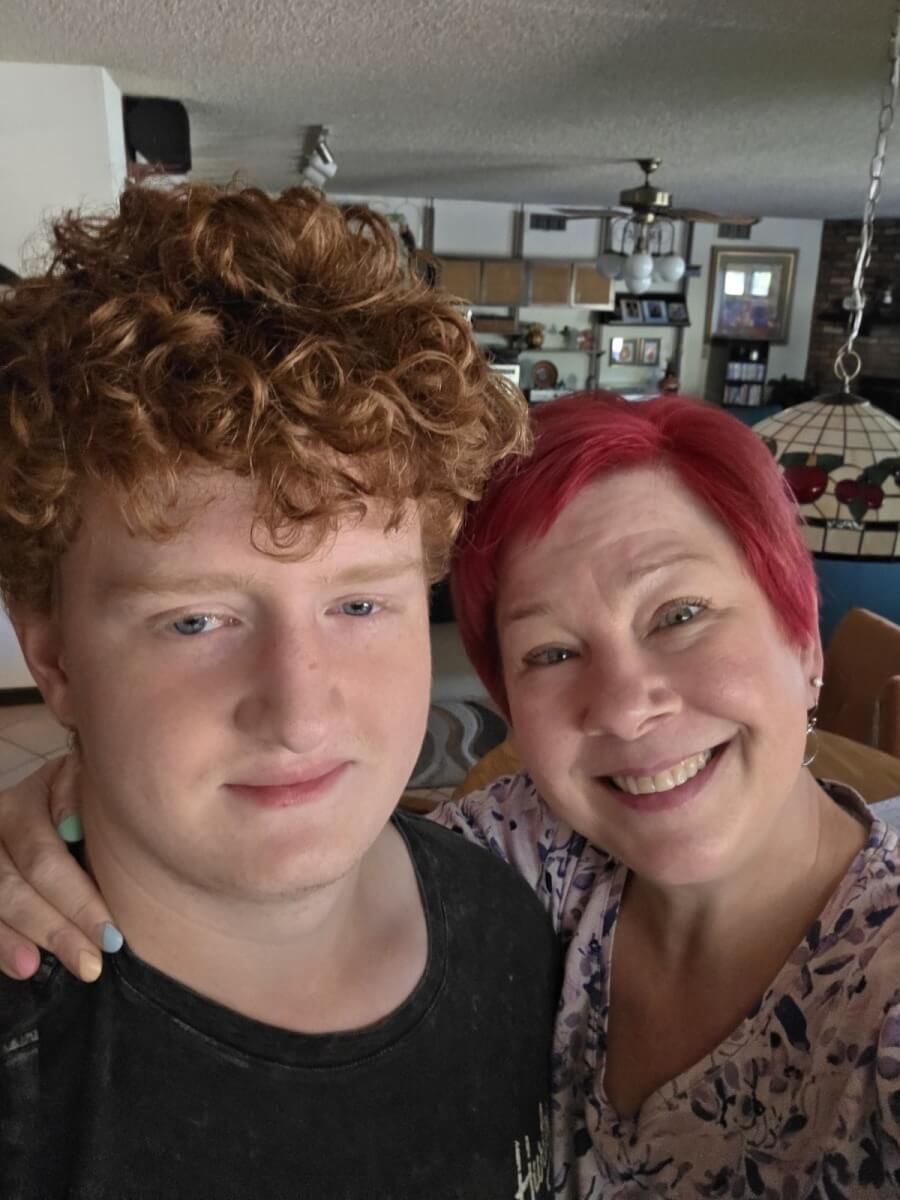 If he needs information, he looks it up when he needs it, usually about ten minutes before whatever he is trying to accomplish. This has been a source of ongoing frustration in our household.
"Did you read the email?"
"No."
"Do you know where you're supposed to go and who you are supposed to talk to?"
"No."
At which point my blood pressure rises and I start mentally preparing for the inevitable disaster. Except the disaster never comes. Every single time I am convinced this will finally be the situation that proves me right, he somehow finds the information he needs, gets where he's going, and completes the task.
And that has forced me to ask an uncomfortable question: Is my tendency to over-plan actually necessary, or is it just anxiety? 🤔
Research says my kid is normal
This got me thinking... Is this a generational pattern or just my teenager? It turns out the research backs up exactly what's happening at my house.
A survey out of Bowling Green State University found that more than half of students admit they don't always read emails from their institution or academic department, and nearly 40 percent say they don't always read emails from their own advisors. These are the people whose job is to keep a student enrolled, funded, and graduating on time, and the messages still get skipped.
Research on campus resource awareness backs this up from another angle. A national survey of college students found that only about a third even know the registrar's office even exists, despite the fact that nearly every school has one and uses it constantly. The information isn't hidden... students simply aren't paying attention until they need it.
There's also a fascinating workplace study on bulk email that maps almost perfectly onto college inboxes. Researchers found that the broader and more impersonal an email looked, the less likely anyone was to actually open it, let alone read past the first line. A message from "the University" sent to everyone got skimmed and flagged as not-my-problem. Students' brains can correctly identify mass institutional email as low value, low urgency, and almost never about them specifically.
So my son isn't malfunctioning. He's pattern matching against a lifetime of irrelevant mass email, and choosing the strategy that has never once failed him: wait until it matters, then look it up.
Students don't ignore emails because they don't care. They simply don't consume information that way. They grew up in a world where all information is available instantly. If they need directions, they search. If they need instructions, they search. If they need help, they search. Information is no longer something collected in advance, but something retrieved when needed. That shift in perspective completely changes how they interact with email.
The part that is frustrating for us older folk is that this strategy often works. Students are growing up in an environment where information is searchable, accessible, and available on demand. What looks like procrastination to many of us is just a different approach to information gathering.
The noise problem is real, and it's not just Gen-Z
Here's something that surprised me. Gen-Z actually isn't avoiding email itself. Most surveys show they check it daily, often multiple times a day, and plenty of them say they prefer it for anything that feels official. The problem isn't the format. It's the noise.
The average older adult deals with well over a hundred emails a day. Gen-Z inboxes tend to be lighter, but they're still buried specifically with institutional noise: orientation reminders, parking permit notices, library newsletters, financial aid nudges, club spam, and several versions of the same housing deadline reminder. When everything is labeled urgent, nothing is urgent. The brain starts triaging by sender and subject line alone.
Open rates across higher ed sit around 24 percent on average, but they jump dramatically when an email comes from a specific person with a clear and immediate reason to open it. Personalized subject lines outperform generic ones by double digits. Emails that pose a question or use the student's name get opened more. Emails announcing a policy change that doesn't feel relevant to that student get ignored almost entirely, regardless of how important the university thinks it is.
In other words, the format that wins isn't "here is everything you'll need to know." The format that wins is "here is the one thing you need to do right now."
What this means if you actually want students to do the thing
As card office professionals, I know you share in my frustration as you continually answer questions from students knowing you already sent them the answers! You may spend a lot of time writing emails that explain what they will need to know next week, next month, or what to do "in case" something happens.
A lot of things suddenly made more sense if we stop viewing this as a student engagement problem and start viewing it as an information timing problem. Our goal isn't getting students to read every email. That's a battle we're probably not going to win. The goal is making sure they can successfully find the information when they finally decide they need it. Here are some tips to consider:
- Stop assuming that sending an email equals communicating. An email is only useful if the information can be found again later. Students may not read your message when it arrives. They may search for it two weeks later when they suddenly need their mobile credential, meal plan information, or replacement card instructions. Use clear subject lines and simple instructions so they can find the email when they need it.
- Send information close to the moment it's needed, not months ahead of it. A reminder about move-in day logistics lands a thousand times better the week before than the month before. And if it's truly time sensitive, assume it's going to get buried next to forty other emails that look exactly like it, and find a second channel, a text, an app notification, or anything that doesn't depend on a teenager opening an email out of curiosity.
- Include one task per email instead of a list of six things "to keep in mind." Keep the instructions short and simple, and include web links in case they choose to bookmark an important page for later.
- Look at every task you are asking them to complete through a self-service lens. We should focus less on delivering information early and more on making information easy to find at the moment of need. Make sure the information you want them to know is easy to search for and locate on your website with clear steps, a FAQ, or support resources for when a student decides they need help.
And finally, we should keep sending those emails anyway.
Not for the students.
For the parents.
Trust me. We're reading every single one. We've had the anxiety pre-installed since childhood anyway. Might as well get some use out of it.