Why One University Offers Commemorative Cards (and Why You Might Too)
Why One University Offers Commemorative Cards (and Why You Might Too)
When I think about campus cards, I’m reminded of my very first college ID. I was an excited freshman, newly admitted to Old Dominion University in 1991. Orientation lasted two days, and we stayed overnight in the residence halls. I remember the presentations, placement testing, and the challenge of choosing classes. But what I looked forward to most was receiving my ODU campus ID card.
To me, that card was a trophy. It was a symbol that I was officially a college student, and the first in my family to attend university. Back then, my ID was laminated, displayed my social security number, and used a magnetic stripe with limited functionality. But none of that mattered. It represented a major milestone: the transition from high school to higher education and the beginning of my journey toward becoming a college graduate.
A Changing Landscape
Much has changed in the campus card industry since 1991. Card technologies have evolved from magnetic stripe and proximity cards to encrypted contactless formats. Thankfully, displaying social security numbers is a thing of the past, as institutions recognized how frequently these cards are used both on and off campus. Today, many universities are adopting mobile or digital ID cards, a modern and convenient solution for students.
But this shift raises an important question: How does the move to mobile IDs affect students’ sense of belonging? Are they missing that physical “trophy”, the tangible proof of their achievement and identity as a university student?
More Than Just a Card
Campus cards are often the first tangible connection students have with their institution. Receiving one during orientation is a powerful moment. It's a badge that says, “You belong here.” Especially during the early weeks of college, when students are adjusting to a new environment, that card can help them feel recognized and included. It’s no surprise that many students proudly share photos of their campus ID on social media.
Is Technology Erasing Community?
Digital campus cards offer many advantages. They integrate seamlessly with mobile devices, providing real-time access to campus resources, event notifications, peer meetups, and support services. These features can foster spontaneous engagement and deeper social connections. Still, some students may feel a sense of loss without a physical card to hold and display.
A Hybrid Approach: The University of Alabama’s Commemorative Card
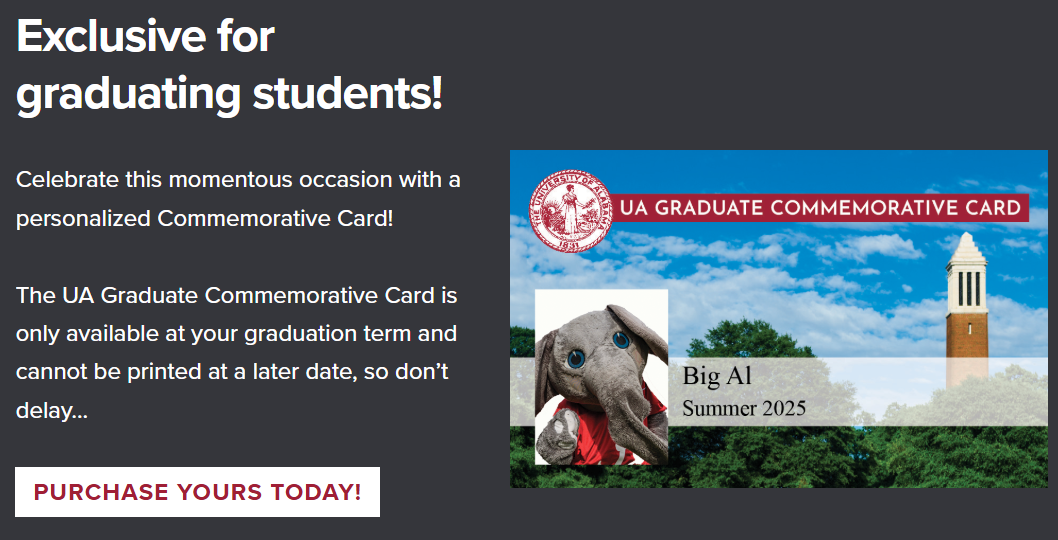
The University of Alabama listened to their students, who appreciated the convenience of mobile IDs but also wanted a physical card to commemorate their time at the university. In response, Alabama launched its Commemorative ACT Card program.
According to the UA News Center, purchasing a commemorative ID card is one of the top five things to do before graduating.
This keepsake features the student’s ACT Card photo, name, and graduation term, and is available only to graduates who have applied for the current term. For $50, students can order their commemorative card online by May 31.
Courtney Petrizzi, Communications & Marketing Director in Finance & Operations at the University of Alabama, shared that the program is extremely popular among students, and is a testament to the emotional value of having a physical memento.

The Card Still Represents Belonging
Campus cards are more than just tools, they’re symbols of identity, inclusion, and engagement. When thoughtfully designed, they help transform a campus from a collection of buildings into a vibrant, welcoming community. While virtual cards offer convenience and enhanced functionality, physical cards remain meaningful trophies that represent a student’s journey and accomplishments.
As your institution considers transitioning to mobile IDs, think about offering a physical card option for students who want that tangible reminder of their college experience. It’s a small gesture that can make a big impact on their sense of belonging and pride.