
What One Person Card Offices Reveal About the Modern Campus Card Office
What One Person Card Offices Reveal About the Modern Campus Card Office

Ask someone outside higher education what a campus card office does, and you'll probably hear some variation of "they make student IDs."
That answer may have been closer to reality years ago. Today, it misses most of the picture.
During a recent NACCU NetworX discussion for one-person card offices, professionals from institutions across North America shared what they're working on. What emerged wasn't a conversation about cards, but a conversation about operations.
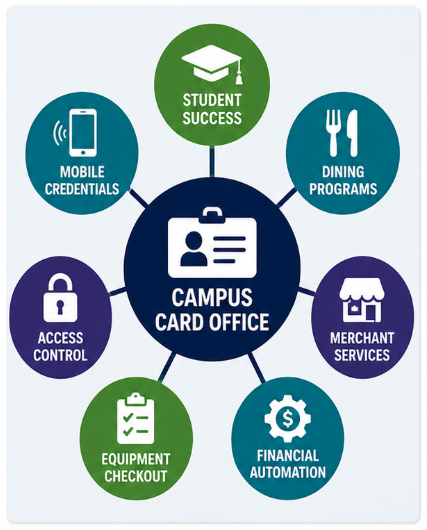
Construction projects. Access control. Financial systems. Student support programs. Mobile credentials. Merchant services. Process improvement. Emergency planning.
In many cases, all of those responsibilities are flowing through a single person.
One-person card offices provide a unique window into how the profession has evolved. When there is only one person managing the operation, it becomes impossible to ignore how many different parts of the institution now connect through the campus card office.
Success Isn't Always a Technology Project
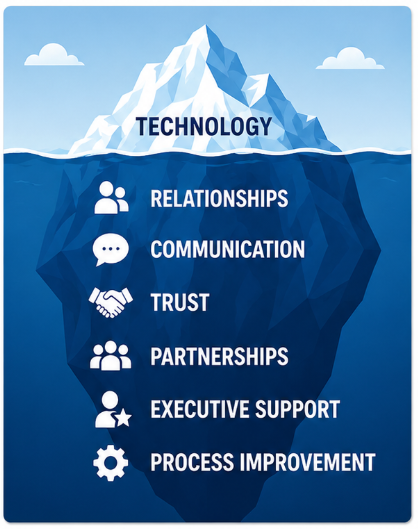 One of the most interesting themes from the discussion was how participants defined success.
Some pointed to technology initiatives, software upgrades, or mobile credential deployments. But many of the accomplishments they were most proud of had little to do with technology itself.
Participants talked about building stronger relationships with campus partners, improving communication, creating clearer processes, securing executive support, and laying the groundwork for future projects.
Those accomplishments may not come with a launch date or recognition, but they often determine whether larger initiatives succeed, because the work of the modern campus card office is increasingly about bringing people together.
Technology and infrastructure are important. But successful projects often depend on trust, collaboration, and the ability to help different departments move toward a common goal. In many ways, that coordination role has become just as important as the systems themselves.
One-Person Card Offices Are Driving Innovation
The discussion also highlighted how frequently card offices are leading initiatives that extend far beyond credentials.
Participants shared examples of:
- Improving operational efficiency through automation of financial and accounting processes
- Supporting student success by addressing food insecurity through campus credential initiatives
- Expanding food delivery and dining partnerships
- Launching off campus merchant programs
- Supporting mobile first campus strategies to create seamless experiences
None of these projects fit neatly inside the traditional image of a card office, but they make perfect sense when viewed through the lens of campus operations.
The campus credential touches identity, access, payments, dining, housing, recreation, events, and student services. Because of that, card office professionals often have visibility into challenges and opportunities that span multiple departments.
As campuses continue looking for ways to improve the student experience and streamline operations, card offices are increasingly finding themselves in a position to connect people, systems, and processes that might otherwise remain siloed.
Card Offices Are Involved Earlier in Campus Projects
The growing operational role of card offices becomes even more apparent during campus construction and renovation projects. Several participants described being involved in projects ranging from recreation facilities and event centers to police facilities and academic buildings.
What stood out was not just the scale of the projects, but that card office professionals were being invited into the conversation early. Historically, it was common for card offices to be brought in near the end of a project, if at all. A building would be nearly complete before the question was asked... "How do we make the card system work here?"
Today, many institutions are involving credential and access professionals much earlier in the planning process. That shift reflects a broader understanding of how deeply campus operations are interconnected.
Access control, credentialing, payments, security, operational workflows, and user experience all influence how a building functions once people begin using it. Decisions made during planning and design can have operational impacts for years. As a result, card office professionals are increasingly contributing not just technical expertise, but operational insight.
The Growing Scope of Responsibility
The same factors that have elevated the role of card offices have also expanded the demands placed on the professionals who run them. Participants discussed ongoing budget pressures, documentation challenges, succession planning concerns, and the reality of balancing long term projects with daily operational responsibilities.
As responsibilities continue to expand, burnout remains a concern for many professionals working in highly specialized roles. That reality makes peer communities more important than ever. For many one person offices, professional networks provide an opportunity to share ideas, compare approaches, and learn from colleagues facing similar challenges.
More Than a Card Office
If there was one takeaway from the discussion, it was this:
One-person card offices offer a clear view of what the campus card profession has become.
Today's card offices are not just issuing credentials. They are helping improve operations, supporting student success, coordinating across departments, contributing to major campus projects, and connecting systems that affect nearly every part of the campus experience.
The credential may still be the most visible part of the job, but increasingly, the real work happens behind the scenes.
And in many cases, one person is helping hold all of those pieces together.
Watch the full discussion here: